Setting Up an Automated Customer Journey That Turns More Leads into Sales
Why the customer journey matters for lead conversion
Getting a lead into your system is only half the work. The real challenge is moving that person from initial interest to a confident buying decision. Without a structured path, many prospects drift away, and the time you invested in attracting them is wasted. An automated customer journey solves this by delivering the right message at the right moment, keeping your brand top of mind without requiring constant manual effort. When done well, it can significantly lift your conversion rate, especially when paired with reliable lead conversion software that tracks and responds to each prospect's behavior.
Step 1: Map your ideal journey from first touch to close
Before you automate anything, you need a clear picture of the steps a lead takes from the moment they first encounter your business to the point they become a customer. This is your conversion funnel, and it will look different depending on your industry and audience. Start by listing the key stages: awareness, interest, consideration, and decision. For each stage, ask what the lead needs to know or feel to move forward. A prospect who just signed up for a newsletter needs different information than someone who has requested a demo. Sketch out the logical flow, including the points where a lead might drop off. Common sticking points include a lack of social proof, unclear pricing, or not enough urgency. Knowing these gaps helps you design messages that address them directly.
Step 2: Choose the right lead conversion software
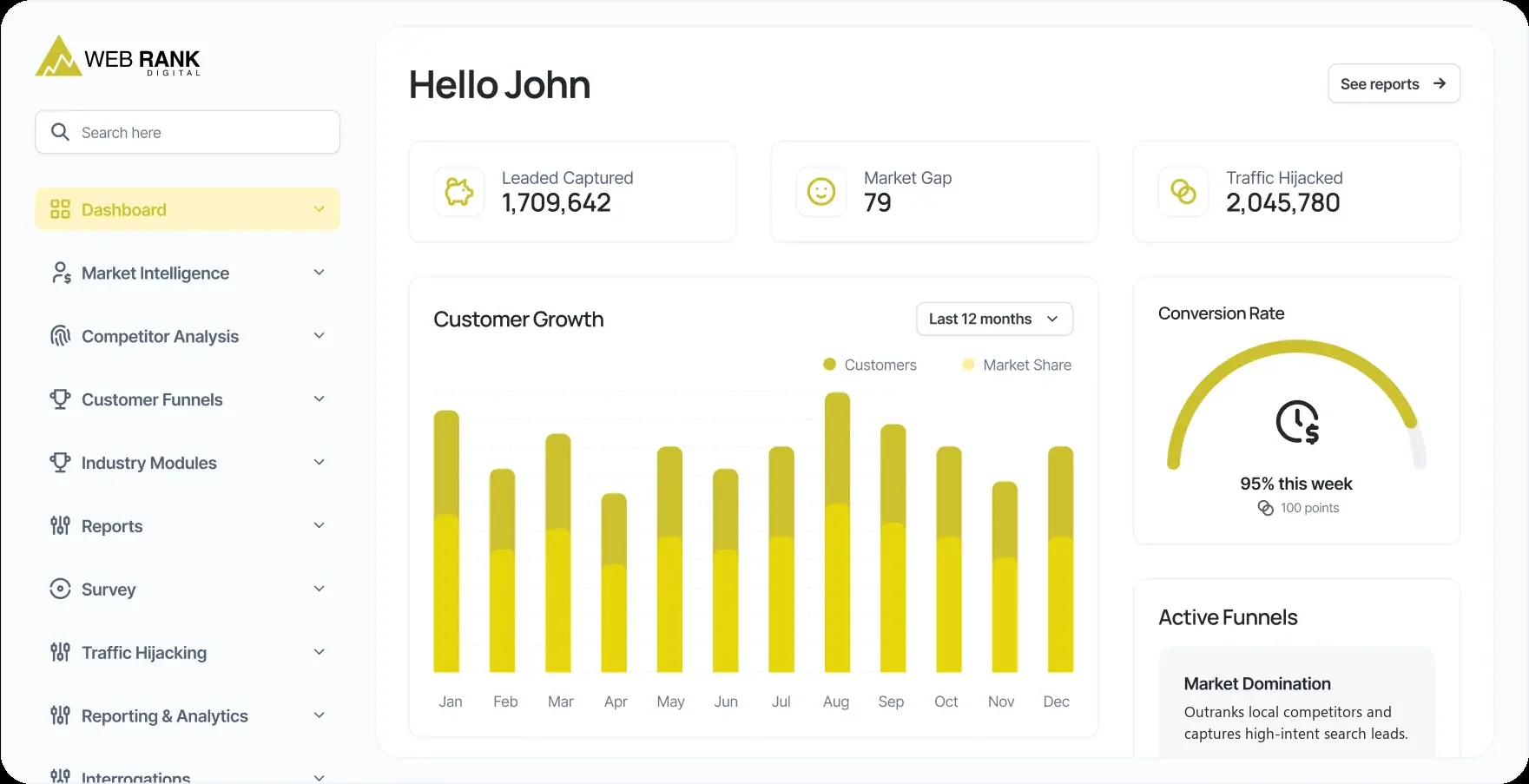
Your software is the engine that runs the entire automated journey. Look for a platform that lets you build multi-step follow-up sequences, trigger actions based on prospect behavior, and integrate with your landing pages and email system. Many tools offer visual builders where you can drag and drop steps, set delays, and define conditions such as "if the lead opens the email but does not click, send a reminder after two days." The best solutions also provide analytics so you can see where people are dropping off and adjust your flow accordingly. A platform like webrankdigital.com is designed around customer acquisition, combining market intelligence and competitor analysis with automated funnels and lead tracking. This type of software gives you a complete view of how your journey performs across different locations, which is especially useful if you serve multiple markets.
Step 3: Create a lead magnet and a dedicated landing page
The first step in any automated journey is capturing the lead's attention with something valuable. This could be a free guide, a checklist, a video series, or a consultation offer. The offer should be directly related to what you sell, so the leads you attract are already somewhat qualified. Once you have the offer, build a focused landing page that explains the benefit clearly and asks for minimal information, usually just a name and email address. Keep the page clean, with a single call-to-action and no distracting navigation links. Test different headlines and button text to see what resonates. The landing page is the gateway to your funnel; if it does not convert, nothing else matters. Use lead conversion software to track how many visitors fill out the form and where they go next. A low conversion rate on the landing page might indicate that the offer is not compelling enough or that the page loads slowly.
Step 4: Design a lead nurturing sequence that educates and builds trust
Once someone opts in, your automated follow-up sequence takes over. The goal of lead nurturing is not to sell immediately but to provide value and demonstrate expertise. A typical sequence might start with a welcome email that delivers the promised offer and sets expectations for what the lead will receive. Over the next few days, send a series of emails that address common questions, share case studies or examples, and highlight the benefits of your solution. Each email should have a single focus and a clear next step, such as reading a blog post, watching a short video, or booking a call. The tone should be helpful, not pushy. Pay attention to open rates and click-through rates; if engagement drops, try changing the subject line or the content format. Some prospects will respond quickly, while others need more time and touchpoints before they are ready to buy. Good lead conversion software lets you set different paths based on behavior, so active leads get more direct offers while less engaged ones receive re-engagement campaigns.
Step 5: Use behavior triggers to send the right message at the right time
Timing is everything in automated marketing. Sending a generic follow-up to someone who just visited your pricing page is less effective than sending a message that references that visit and offers a comparison chart or a case study. Behavior triggers allow you to react to what a lead does in real time. For example, if a prospect clicks a link about a specific feature, you can automatically move them into a segment that receives more detailed information about that feature. If they watch a demo video all the way through, you can trigger a notification to your sales team or send a direct invitation to a live call. These micro-interactions make the journey feel personal and responsive, even though it is fully automated. The key is to define the triggers before you launch the journey and to test them regularly. Over time, you will learn which behaviors signal genuine interest and which are just casual browsing.
Step 6: Score and segment leads to prioritise high-value prospects
Not all leads are equal. Some are ready to buy now, while others are still researching and may not convert for months. Lead scoring assigns points based on actions such as email opens, page visits, form submissions, and time spent on your site. When a lead crosses a certain threshold, they are flagged as "sales-ready" and can be routed to your team for a personal follow-up. This prevents your salespeople from wasting time on cold leads and ensures that hot prospects get immediate attention. Segmenting your list also helps you tailor your messaging. A small business owner has different pain points than a corporate buyer, and your automated sequences should reflect that. Most lead conversion software includes built-in scoring and segmentation tools. If your current platform does not offer these features, it may be worth switching to one that does, such as webrankdigital.com, which includes lead tracking as part of its customer acquisition suite.
Step 7: Monitor, test, and refine the journey continuously
An automated customer journey is not a set-it-and-forget-it project. Markets change, offers get stale, and prospects develop new expectations. Schedule regular reviews of your key metrics: conversion rate from lead to opportunity, time from first touch to close, email open and click rates, and landing page conversion rates. Run A/B tests on subject lines, call-to-action buttons, email copy, and the timing of your messages. Small changes can produce big improvements over time. For example, moving a testimonial earlier in the sequence might increase trust and reduce drop-off. Pay attention to the feedback loop from your sales team. If they report that leads are not prepared or are asking the same basic questions repeatedly, adjust your nurturing content to address those gaps earlier. The journey should evolve as you learn more about what works and what does not.
Watching for common pitfalls
Even a well-designed automated journey can stumble if you overlook a few key points. One common mistake is sending too many emails too quickly, which can overwhelm or annoy prospects. Give each message time to land before sending the next. Another pitfall is neglecting mobile optimization. Many leads will open your emails on their phones, and if the content looks broken or the buttons are too small, they will click away. Also, be careful with the language you use. Avoid overly salesy phrases and focus on solving the reader's problem. Finally, do not forget to include an easy way to unsubscribe. Keeping uninterested people on your list hurts your deliverability and skews your data. A clean, engaged list is far more valuable than a large, disengaged one.
Putting it all together
Building an automated customer journey that converts more leads is a systematic process. It starts with understanding your audience's decision path, selecting the right software, and creating a compelling offer. From there, you build a nurturing sequence that educates and builds trust, use behavior triggers to stay relevant, and score leads so your team focuses on the best opportunities. Regular testing and refinement keep the journey effective over the long term. The result is a smoother experience for your prospects and a more predictable pipeline for your business. With the right approach and the right tools, you can turn casual interest into loyal customers without burning out your team.